
JSX is arguably one of the best hidden gems in the travel industry. In case you never heard of JSX here’s the basic rundown. Since 2016, JSX has been operating 30 seat aircraft throughout the west coast, southwest and most recently the northeast. Unlike traditional airline operators, they operate out of private terminals instead of the crowded airline terminals. They operate Embraer ERJ 135 and 145 regional jets with spacious seating in either 2-1 or 1-1 seating. In June 2025, JSX placed an order for the ATR 42-600 turboprop which opens up dozens if not hundreds of new markets. One of these aforementioned markets is Santa Monica Airport (SMO) located on the outskirts of Los Angeles. The airport has a cozy 3500-foot runway which makes traditional airline service next to impossible. Not for JSX though! With their first ATR 42 they will operate daily service to Las Vegas and Scottsdale. On their second day of ATR 42 operations, we will hop on at Santa Monica and see how one of JSX’s newest planes and routes stacks up.

An Airport On The Verge Of Extinction
Yes, you heard that right. The airport will eventually close……permanently. Back in February 28, 2017, the City Council adopted Resolution 11026 essentially directing the City to take the steps necessary to ensure the closure of the Santa Monica Airport effective December 31, 2028. Until then JSX will operate flights in and out of the airport right up to the anticipated closure.
Pre Flight Experience
Now this is where JSX truly shines. JSX has a rather seamless preflight experience. It starts with their basic booking platform where you book your ticket and reserve seats. Our ticket came out to a rather affordable $110.51 which included a checked bag and carry-on bag. Given the new route, terminal information was only sent a few weeks prior to the route commencing. The private terminal in Santa Monica has limited parking but is easily accessible via rideshare. Being a public charter operator, you won’t have to worry about long lines or rushing to the airport with JSX. The terminal offers a basic setup with light snacks and refreshments.

Boarding was called in one group as opposed to by section. Given the small size of the aircraft there isn’t much hassle boarding. There is a quick security check by the door where bags are put through an x ray while you walk through a scanner that is commonly used at sporting venues.

Now for a cool quirk with the ATR 42 turboprop. Instead of boarding from the front you board from the back of the aircraft since the cargo hold is in the front of the passenger cabin. If you are into aircraft, then this gives a perfect opportunity to get up close and personal with the aircraft.

First Impressions
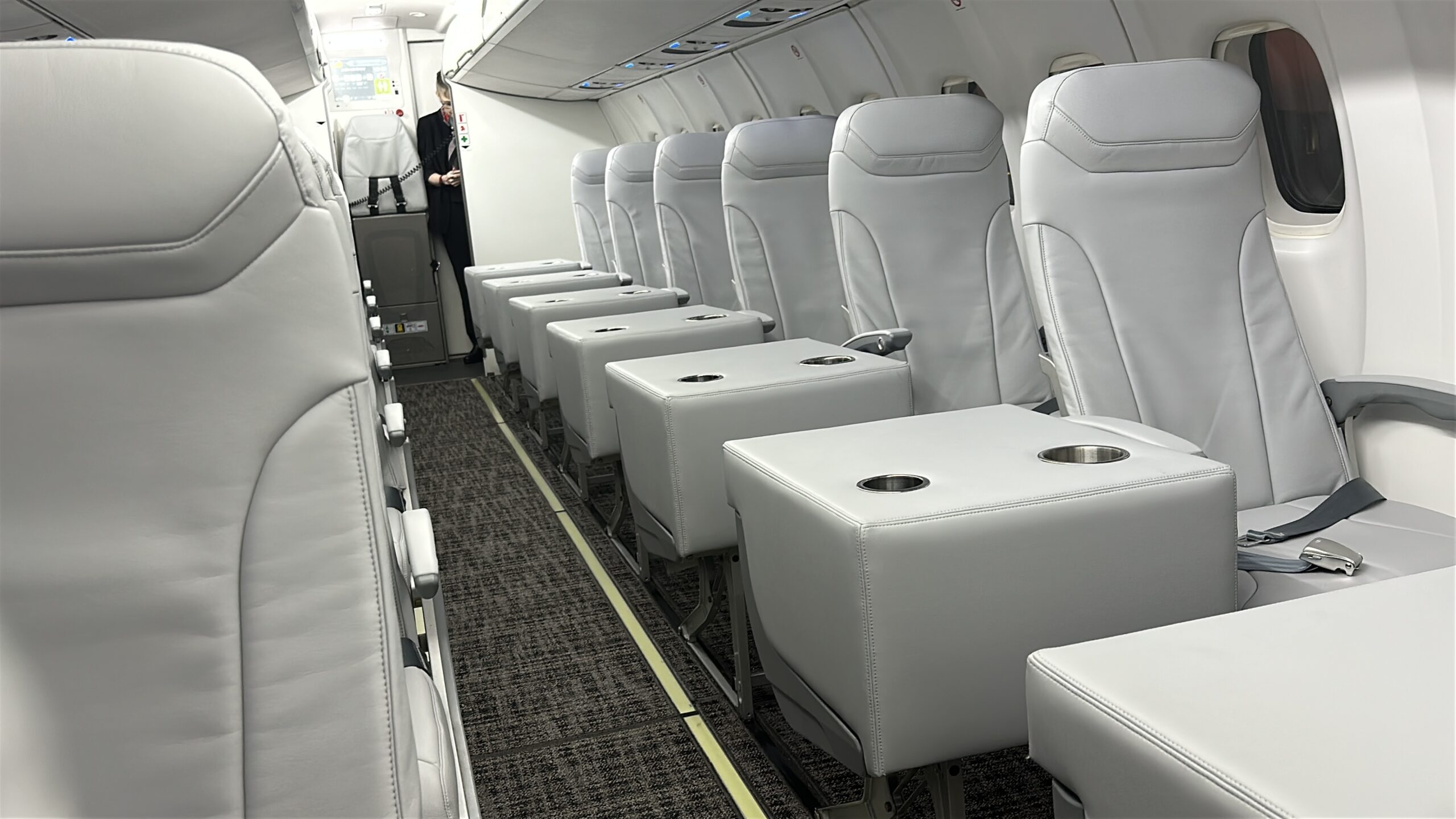
Our flight attendant cordially greeted each passenger at the rear boarding door as we hopped on. It immediately becomes apparent that this isn’t your typical regional aircraft. The left side of the aircraft sports a single seat with a rather large drink table occupying where the other seat would be. Unlike their jet aircraft, JSX has decided to leave the overhead bins installed on their first batch of ATRs. As new deliveries are taken, there is a good chance that they will have the overhead bins removed. Once boarding wrapped up our flight attendant took drink orders. Unlike many mainline carriers, you can choose from a handful of alcoholic and nonalcoholic beverages even on these short flight segments.

Inflight Experience
Shortly after departure our flight attendant sprung right into action with the snack and beverage service. Rather than coming down the aisle with a bulky snack cart, she offered snacks in a branded box which was a nice touch.

So this is one of the shortfalls with the seats on the ATR. The tray table can accommodate small snacks and drinks however anything larger than a tablet will not fit on the tray tables. Now if you are seated on the left side of the aircraft, the single seats with the larger table space should alleviate this. Free Starlink Wi-Fi will be soon joining the ATR fleet however our aircraft was not upfitted with the free speedy Wi-Fi yet. Given that the short hour-long flight segments the aircraft operate, not having Wi-Fi installed right away is not too big of a deal breaker. AC power outlets are located underneath the seat. The location of the outlets is in a bit of an awkward spot and require some “twisting and bending” to reach the outlets.

Final Approach
Like previous JSX flights we have flown, the whole experience felt nearly flawless. While the initial batch of ATR turboprops lack some of the private jet like amenities like no overhead bins and faux wood tray tables, it makes up for it with its stellar legroom and a comfortable cabin. At no point during the flight did the smaller footprint or noise level of the ATR 42 ever become bothersome. As for the crew on this flight, this is an area where JSX delivered a consistent experience as with previous flights on them. From the ground staff to our flight attendant, service was conducted in a personal way without feeling too stuffy. Personally, what I am most excited for are the new route opportunities that will be coming down the line thanks to the ATRs short runway capabilities. Hopefully in the coming months there will be a JSX ATR turboprop coming to a community near you!